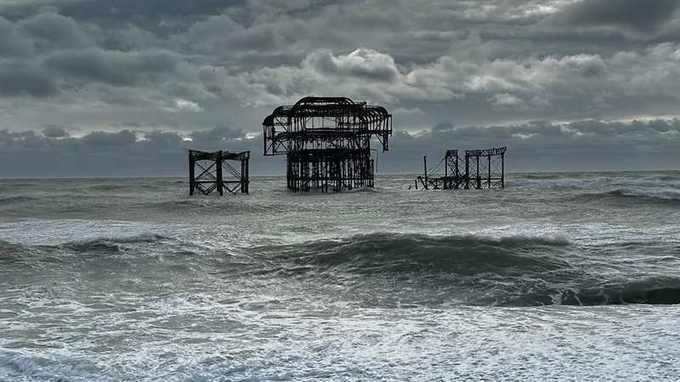
Photos sent to ImJustBrighton by readers on Friday 23 October 2026 show the West Pier in separate pieces after Storm Austen. Put next to photos from 2024, they show how much of the ruin has changed. The West Pier Trust told ImJustBrighton that the storm has caused more of the pier to collapse into the sea.
Taken on Friday 23 October 2026. From the beach, by readers who sent the photos to ImJustBrighton.
What the Trust says. Storm Austen has caused more of the pier to collapse into the sea, it is too dangerous and costly to stabilise, and everyone should keep a safe distance.
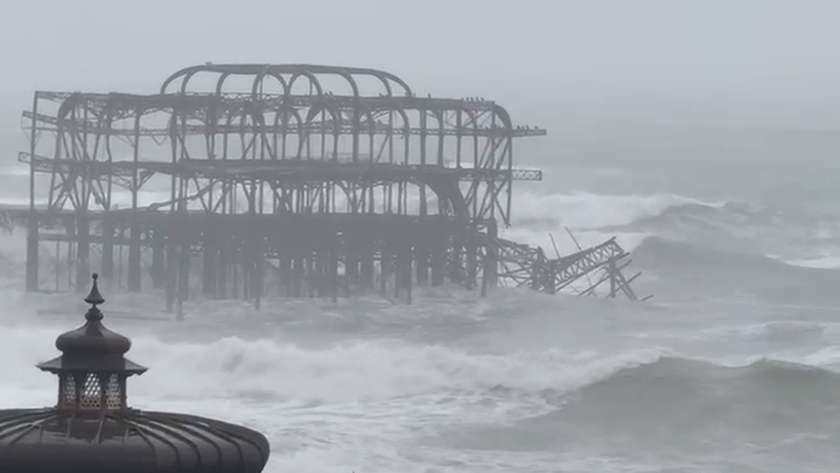
What the photos show. The central iron frame still stands, with a separate piece of ironwork on each side of it and open water between them.
Also in this report. Why the pier is in this state, why nobody is saving it, and what the Trust plans next are below. Our main report on the collapse is West Pier Trust: Storm Austen Has Caused More of Brighton’s West Pier to Collapse.
What the West Pier Trust says
ImJustBrighton contacted the Trust’s chief executive, Rachel Clark, early on Saturday 24 October with questions about the collapse. Ms Clark, who said she is on annual leave, replied with this statement from the Trust’s Honorary Historian, Professor Fred Gray, dated 23 October 2026.
Storm Austen has caused more of Brighton’s West Pier to collapse into the sea.
Ever since the two devastating arson attacks in 2003, the West Pier has been whittled away by nature. All ruins are alive and ever-changing, and this is true of the West Pier.
It is far too dangerous (and costly) to try to stabilise the structure.
Everyone should stay at a safe distance and watch the battle between pier and the elements. We don’t know when the pier will eventually disappear beneath the waves, but disappear it will.
That so much still remains is a tribute to the Victorian designers and engineers who built the pier.
Professor Fred Gray, West Pier Trust Honorary Historian, 23 October 2026
The statement does not say which section fell. ImJustBrighton has also asked Brighton and Hove City Council for comment and will update this report when it replies.
Zoom in: one frame in 2024, three pieces on Friday
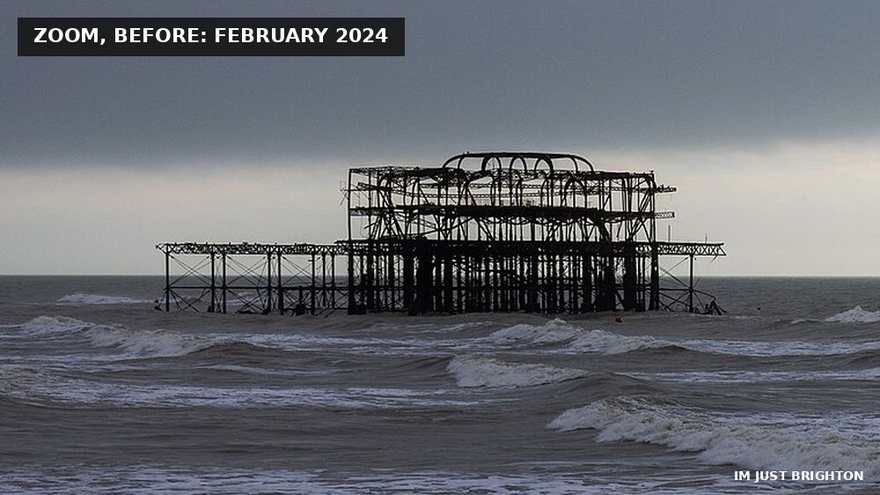
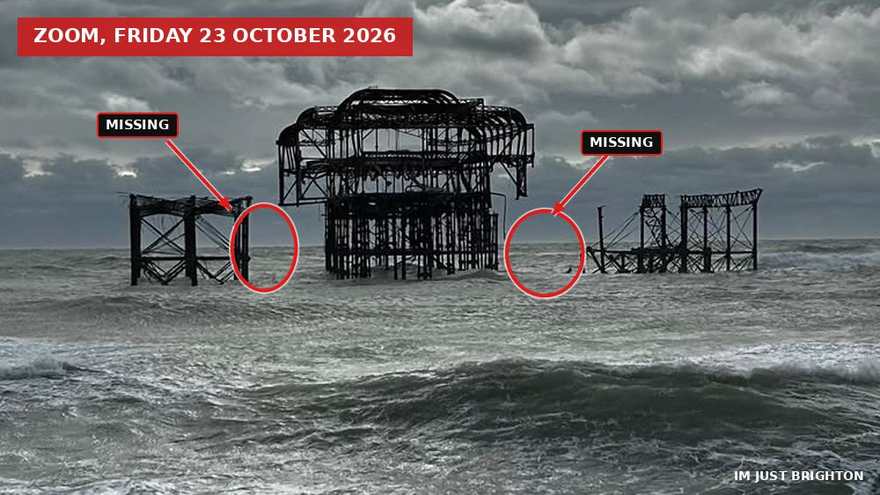
This is the clearest view of the change. In the February 2024 storm photo the ironwork runs together as one long frame, with a lower deck either side of the tall central section. In Friday’s photo, taken from a similar angle, the central frame stands with a separate piece on each side, and open water between them. The arrows mark the two gaps where the ironwork linking them in 2024 is missing. These are our readings of the photos, as the Trust has not said which section fell.
Why the West Pier is in this state
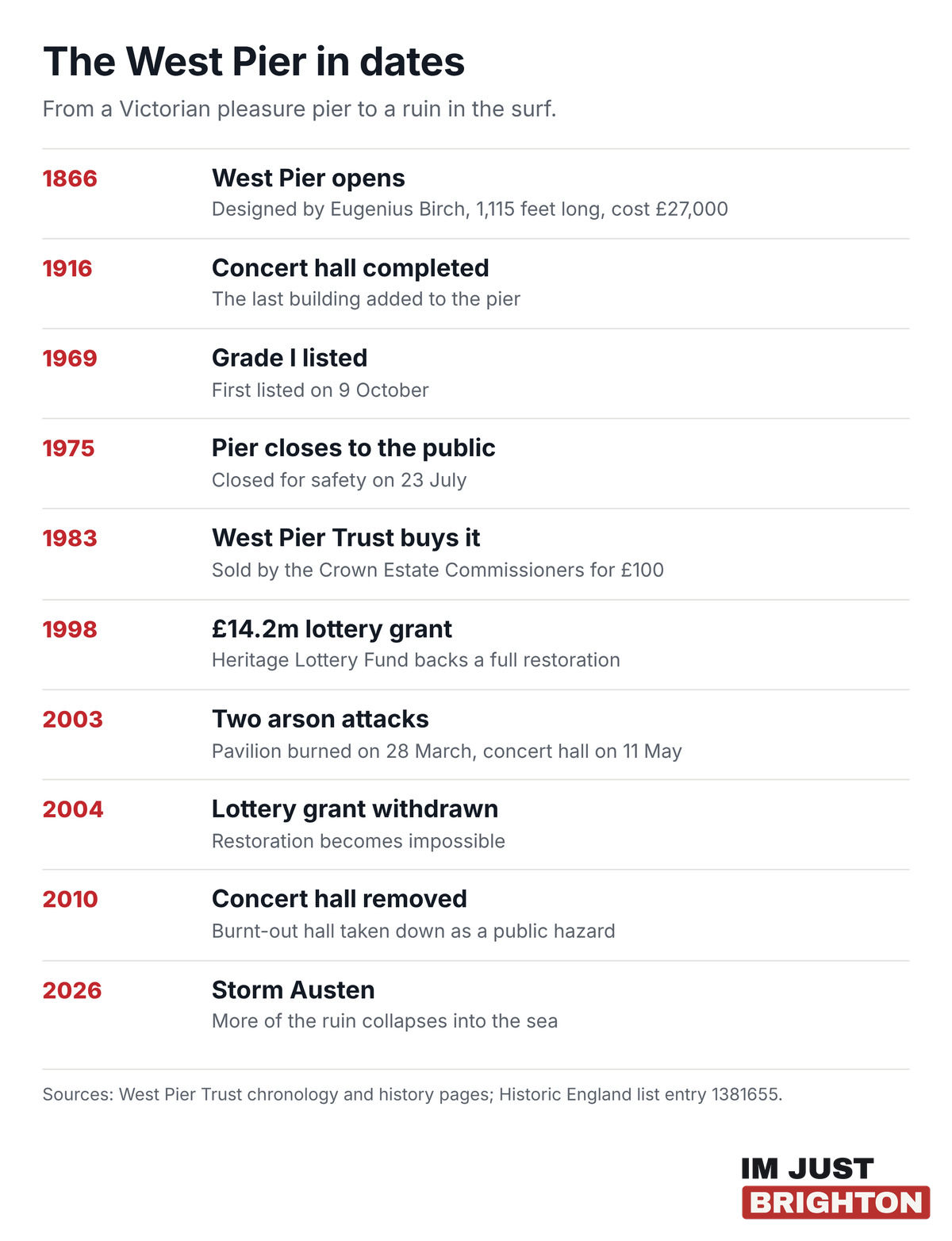
The West Pier was designed by Eugenius Birch and opened in 1866. The Trust’s chronology says it closed to the public for safety reasons on 23 July 1975. In 1983 the Crown Estate Commissioners sold it to the West Pier Trust, a charity, for £100.
For years the Trust aimed to restore the pier. In 1998 the Heritage Lottery Fund awarded £14.2m towards the work. Then, in December 2002, a huge storm badly damaged the concert hall.
The 2003 fires. The pavilion was destroyed in an arson attack on 28 March 2003, and on 11 May 2003 the concert hall was deliberately set on fire. English Heritage reported that repair was still viable, but at its meeting on 28 January 2004 the Heritage Lottery Fund withdrew its funding. The Trust says, in its account of the collapse and fire, that with the lottery money gone the restoration became impossible.
ImJustBrighton note. Professor Gray’s statement says the pier has been “whittled away by nature” since the fires. The Trust’s own survey of the ruin, covered further down, says the arson attacks, not storms, did the worst damage.
The West Pier in dates
Who owns the pier, and why nobody is saving it
The pier is owned by the West Pier Trust. The Trust, created in 1978, says on its About the Trust page that it is a charity and limited company that owns the pier and the rights that attach to it, and that it is non-profit making.
Once the lottery grant went, the Trust says there was no prospect of public funding for a full restoration. The Trust also says it does not have the funds to hold the structure steady. Professor Gray’s statement calls stabilising it “far too dangerous (and costly)”.
The Trust’s plan is to mark the site, warn people to keep away and remove debris that reaches the beach at low water. Its history says it has “no intention of removing the remains unless overwhelming safety issues arise”, and that they will “inevitably degenerate and be reclaimed by nature”.
ImJustBrighton note. The pier has been Grade I listed since 9 October 1969, according to the Historic England list entry. The entry records that the pier was badly damaged by the hurricane of October 1987, and that the causeway was demolished in 1991.
The collapsed section
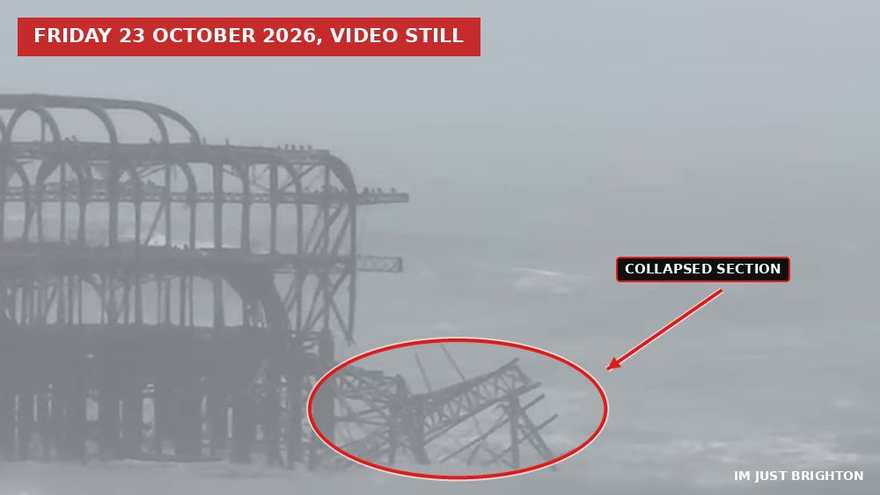
A video sent to ImJustBrighton by a reader shows the central frame standing in mist with a section of lattice ironwork tilted into the water beside its base, waves breaking around it. We have circled it. This is the clearest sign in the footage of the damage the Trust describes.
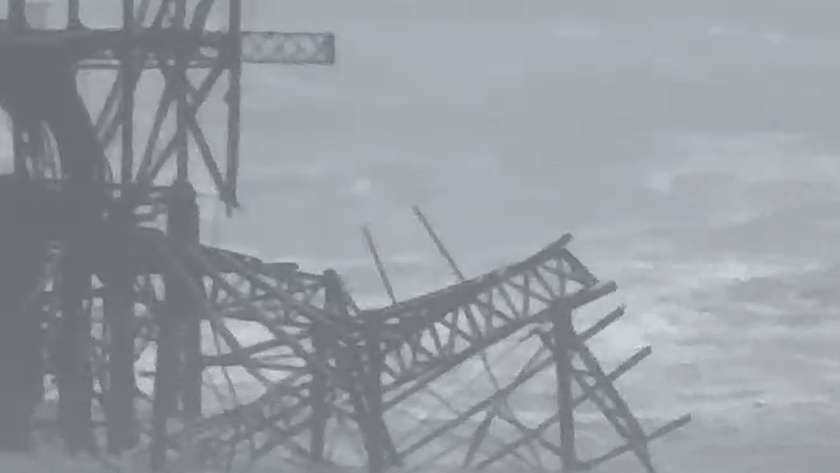
A second clip, filmed from closer in, shows a tilted section of lattice girders lying in the water at the base of the frame, with waves breaking over it.
What ImJustBrighton asked the Trust
Readers kept sending ImJustBrighton photos of the pier in pieces, so we went to the people who look after it. We contacted the Trust’s chief executive about the collapse, and the statement above is the reply. It does not say which section fell.
“We contacted the people who look after the West Pier because readers kept sending us photos of it in pieces. The Trust says it is too dangerous and costly to stabilise, so we wanted you to see exactly what has changed and how to stay safe.”
Tim Graichi Cucarella, founder of ImJustBrighton
ImJustBrighton has also put questions to Brighton and Hove City Council and will add its reply to this report.
Between the iron legs: 2024 and Friday
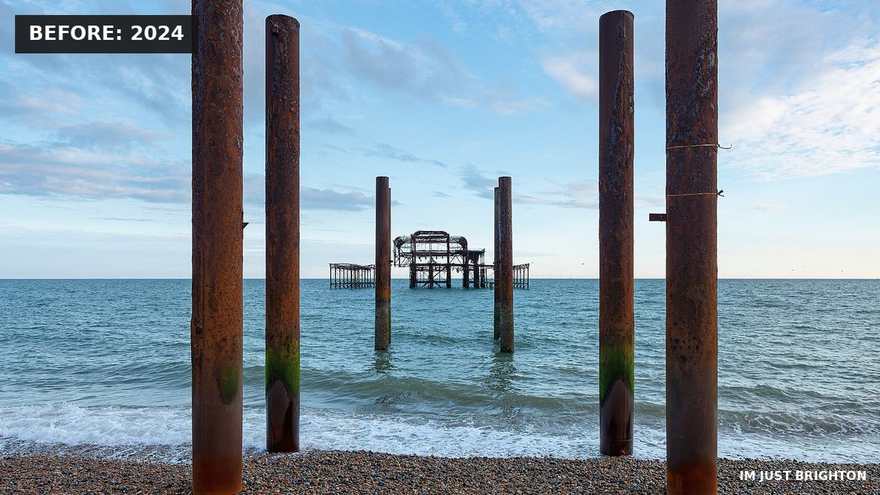
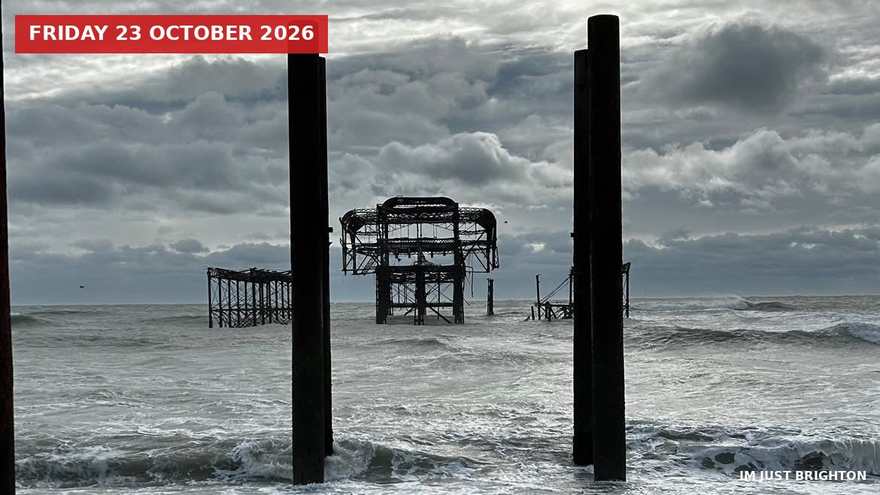
The 2024 photo was taken from the same stretch of beach, looking out between the iron legs left standing from the old pier. Under blue sky and calm water, the pier reads as one frame with lower ironwork running out on either side. On Friday, in heavy surf, the central frame still stands, but the ironwork on each side now sits apart from it.
What happens next
The Trust says it cannot say when the pier will go: “We don’t know when the pier will eventually disappear beneath the waves, but disappear it will.” For now it plans to mark the site and clear debris from the beach at low water.
The Trust has not given up on the site. Its history says it hopes that, with the success of the Brighton i360, “a new contemporary West Pier” will in due course be built.
Brighton and Hove City Council’s West Pier page sets out the planning history. We will update this report when the council replies.
In a storm: February 2024 and Friday
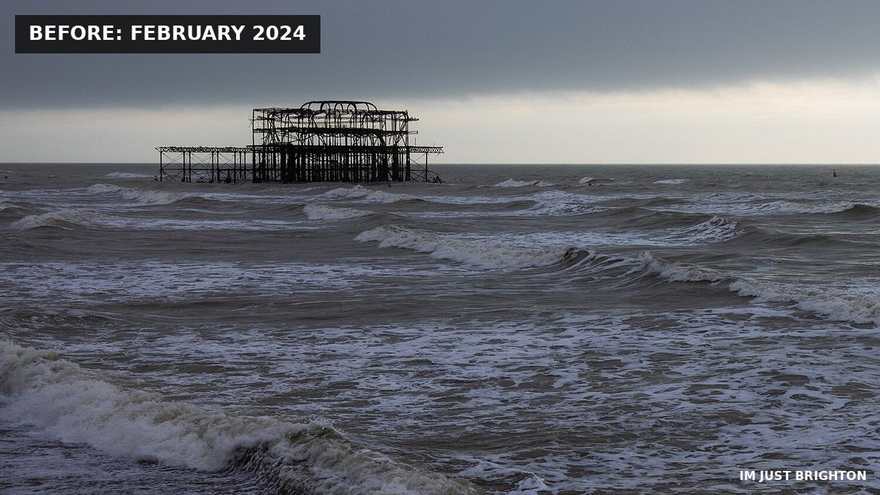
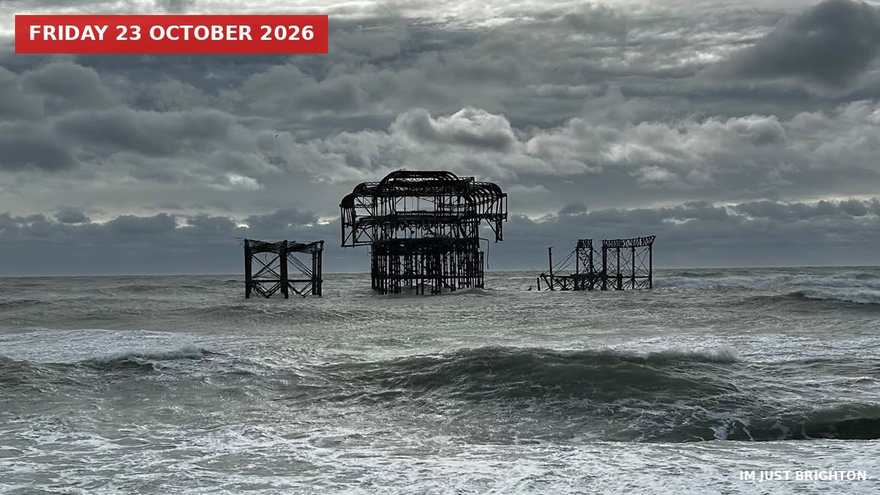
From further along the beach, the same storm-lit view shows the same change: one long frame in 2024, and on Friday a central frame between two separate pieces, with white surf breaking across the gaps.
A ruin full of wildlife
The Trust published close-up drone footage of the ruin, shot on one of the lowest tides of the year, in a report called West Pier Revealed. It says the first close-up shots since the 2003 fires show the pier in better shape than first hoped, with ironwork, staircases, walkways and much of the original support structure still there.
The Trust says the ruin is also home to cormorants and many other birds as well as sea life, calling it a “living iron reef”.
The arches and the long run of ironwork
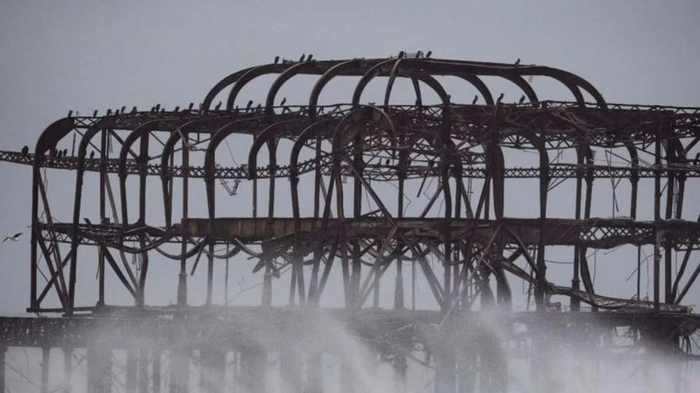
Another clip shows the tallest part of the frame, the row of curved arches, still standing with birds along the top while surf breaks around its base.
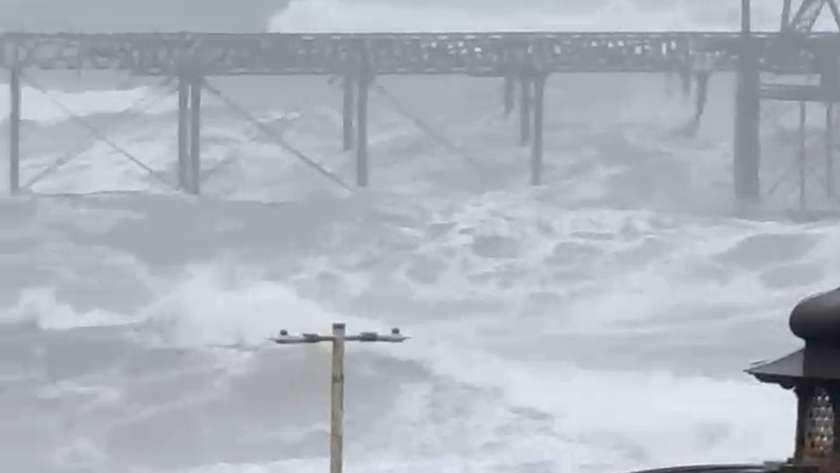
Alongside the tall central frame, a long horizontal run of lattice ironwork stands on iron legs with waves breaking through it. The rest of the pier that once reached out from the seafront is gone.
What the pier was
The Trust’s history says Birch built the pier with dozens of cast iron columns screwed into the seabed, braced by a lattice of ties and girders, so that the sea could pass through. A bandstand was added in 1875, and the concert hall, the last building, was completed in 1916. The chronology gives the pier’s length at opening as 1,115 feet and its cost as £27,000.
Professor Gray’s statement says that so much still remains is “a tribute to the Victorian designers and engineers who built the pier”.
The frame that remains
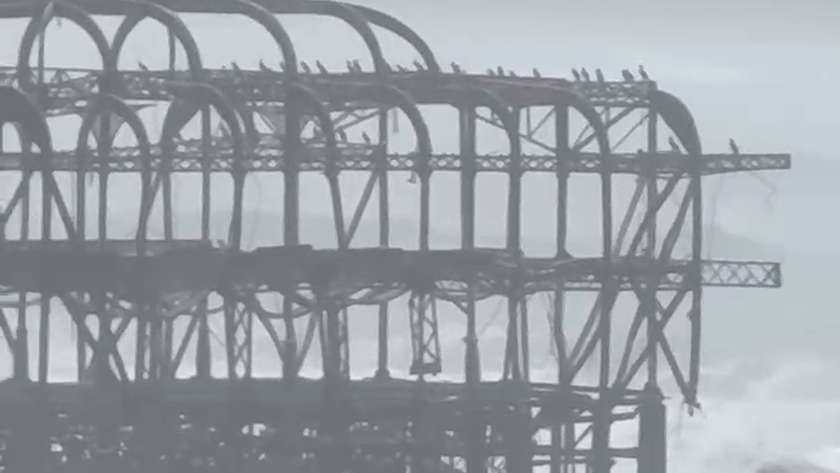
The frame in this clip is what is left of the pier that once held a pavilion and a concert hall. The Trust says the skeletal remains of the pavilion were left to become a feature of Brighton’s seafront.
The storm on the seafront
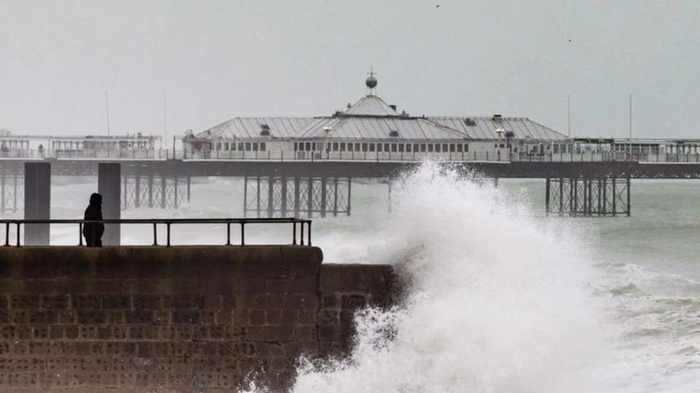
Storm Austen sent heavy surf over the seafront on Friday, and readers sent ImJustBrighton video of waves breaking over the sea wall.
Staying safe
The Trust asks everyone to keep a safe distance, and says the structure is dangerous and should not be approached. Do not go near the pier or any debris on the beach. The Met Office advises being aware of large waves, because even from the shore they can sweep you off your feet and out to sea. In an emergency, call 999 and ask for the Coastguard.
Storm updates, newest first
Saturday 24 October. The Trust sends ImJustBrighton its statement. The Met Office has a yellow rain warning for Brighton and Hove from 11am to 11pm. Read our Storm Boelo rain warning report.
Friday 23 October. Readers send ImJustBrighton photos and video from the beach showing the pier in separate pieces, with ironwork lying in the surf.
Thursday 22 October. The Met Office names Storm Boelo, according to its storm centre.
Tuesday 20 October. The Met Office names Storm Austen.

Comments
No comments yet. Start the conversation.